Artificial Intelligence has become one of the most transformative technologies of the modern digital era. From voice assistants and recommendation systems to autonomous vehicles and advanced medical diagnostics, AI applications rely heavily on powerful computing infrastructure. At the center of this technological revolution are modern AI servers. These specialized systems are designed to process massive datasets, train intelligent models, and deliver real-time predictions at extraordinary speed. Understanding how modern AI servers work helps explain why they have become essential components of today’s technology ecosystem.
Modern AI servers differ significantly from traditional servers used for websites or databases. While conventional servers focus primarily on storage, networking, and sequential processing tasks, AI servers are built specifically for large-scale mathematical computation. Artificial intelligence algorithms, especially deep learning models, require billions or even trillions of calculations to identify patterns within data. To handle this demand efficiently, AI servers combine advanced hardware architecture with optimized software systems and high-speed networking technologies.
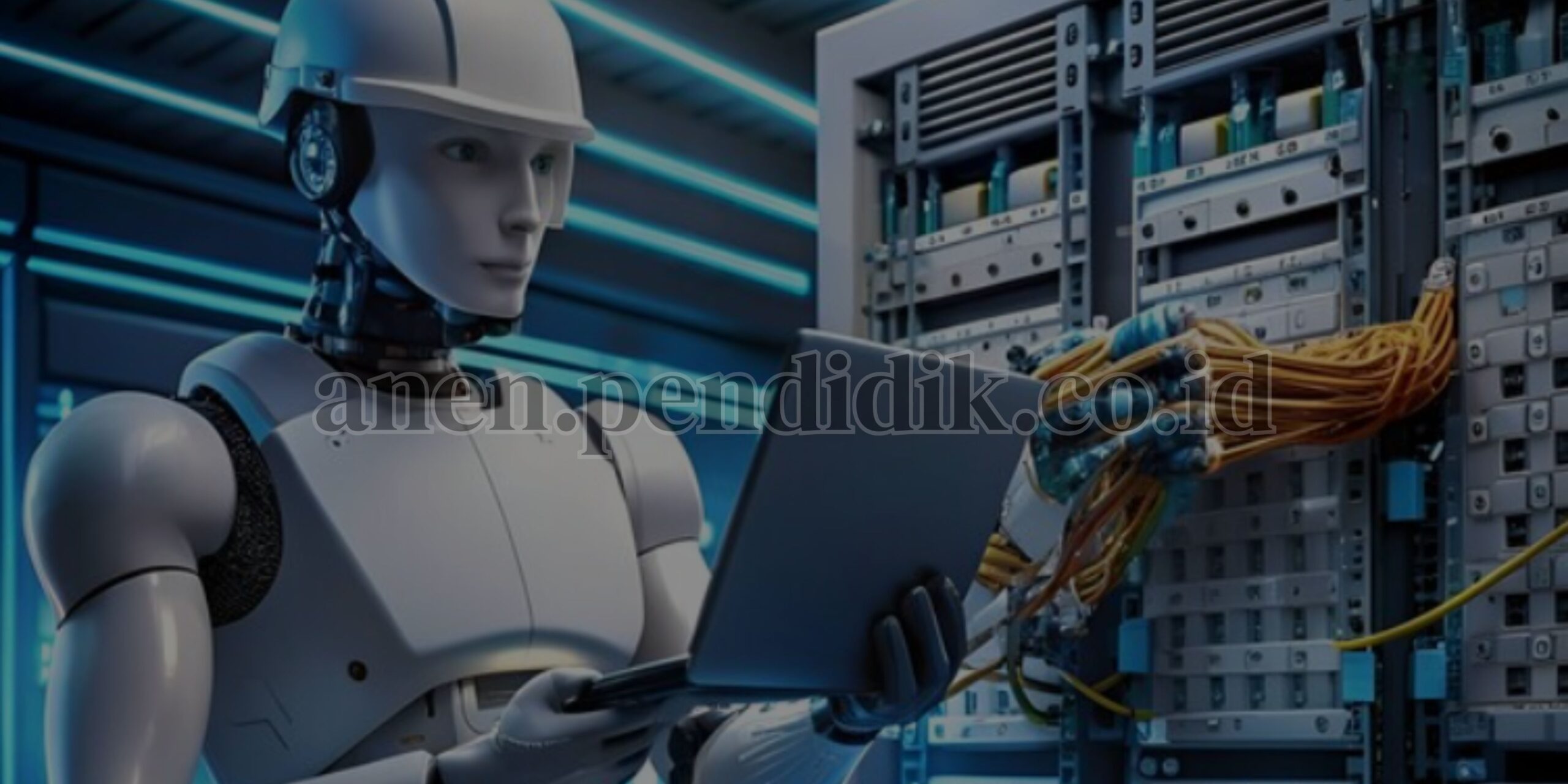
The core of an AI server begins with its processing architecture. Unlike traditional systems that rely mainly on Central Processing Units (CPUs), modern AI servers use a combination of CPUs, Graphics Processing Units (GPUs), and specialized AI accelerators. CPUs manage system operations, coordinate tasks, and handle general computing functions. GPUs, however, perform the heavy computational work required by AI models. Their ability to execute thousands of parallel operations simultaneously makes them ideal for matrix calculations used in neural networks. Some AI servers also include Tensor Processing Units or Neural Processing Units, which are specifically engineered to accelerate machine learning tasks while improving energy efficiency.
Parallel processing is the key principle behind how AI servers operate. In deep learning, large datasets are divided into smaller portions that can be processed simultaneously across multiple processors. Instead of solving problems step by step, AI servers perform many calculations at once. This dramatically reduces training time for AI models. Tasks that once required weeks on traditional systems can now be completed in hours or even minutes using distributed AI server clusters.
Memory architecture plays a critical role in ensuring smooth operation. AI workloads involve continuous data movement between processors and storage systems. Modern AI servers use high-bandwidth memory technologies that allow data to travel quickly between GPUs and system memory. Faster memory access reduces delays and prevents computational bottlenecks. Unified memory systems also enable processors to share data efficiently without constant duplication, improving performance and reducing resource waste.
Storage systems within AI servers are designed to handle enormous datasets. Machine learning models depend on vast quantities of training data, which must be accessed repeatedly during computation. High-speed storage solutions such as NVMe drives and distributed storage networks allow rapid data retrieval. Intelligent caching mechanisms keep frequently used data readily available, minimizing waiting time during training processes. This seamless data flow is essential for maintaining consistent performance.
Networking is another essential element of modern AI servers. Many AI tasks require multiple servers to work together as a single computing environment. High-speed interconnect technologies enable rapid communication between GPUs located in different machines. During distributed training, servers exchange model updates continuously to maintain synchronization. Low-latency networking ensures that data transfer does not slow down overall performance, allowing large AI clusters to function efficiently.
Software frameworks act as the operational layer that connects hardware components with AI applications. Machine learning frameworks provide tools for building, training, and deploying models while automatically optimizing hardware usage. These frameworks distribute workloads across available processors and manage memory allocation. Containerization technology further enhances flexibility by packaging AI applications into portable environments that run consistently across different servers.
Modern AI servers operate through two primary processes: training and inference. Training involves teaching an AI model by feeding it large datasets and adjusting internal parameters to improve accuracy. This phase requires enormous computational power and is typically performed on dedicated AI server clusters. Inference, on the other hand, occurs when a trained model makes predictions using new data. Inference workloads require lower computational intensity but must operate quickly, often in real time. Many organizations separate training servers from inference servers to optimize efficiency.
Automation has become a defining feature of modern AI server operation. Intelligent monitoring systems continuously analyze server performance, temperature levels, and resource utilization. AI-driven management tools can automatically allocate workloads, adjust power consumption, and detect anomalies. Predictive maintenance systems identify potential hardware failures before they occur, reducing downtime and improving reliability. This level of automation allows organizations to operate complex AI infrastructure with fewer manual interventions.
Cooling technology is another important aspect of how AI servers function. High-performance processors generate significant heat during operation. Traditional air cooling methods are often insufficient for dense AI workloads. Many modern AI servers use liquid cooling systems that transfer heat more efficiently, allowing processors to run at higher speeds without overheating. Improved cooling not only enhances performance but also reduces energy consumption, supporting sustainable data center operations.
Energy management is closely linked to cooling efficiency. AI servers consume substantial electricity, particularly during large-scale model training. To address this challenge, manufacturers design energy-efficient processors and intelligent power management systems. Workloads can be scheduled dynamically based on resource availability, ensuring optimal energy usage. Some data centers even integrate renewable energy sources to reduce environmental impact while maintaining high-performance computing capabilities.
Security mechanisms are deeply integrated into modern AI server design. Because AI systems often process sensitive data, robust protection measures are essential. Hardware-based encryption safeguards data during processing, while secure boot systems prevent unauthorized software from running on servers. Zero-trust security models verify every access request, ensuring that only authorized users and applications interact with the infrastructure. AI itself is increasingly used to monitor network activity and detect potential cyber threats.
Cloud integration has expanded the functionality of AI servers. Many organizations combine on-premise AI servers with cloud-based infrastructure to create hybrid environments. Local servers handle sensitive or latency-sensitive tasks, while cloud platforms provide scalable resources for intensive training workloads. This hybrid approach allows businesses to balance performance, cost efficiency, and flexibility.
Edge AI servers represent another evolution in how modern AI systems operate. Instead of sending all data to centralized data centers, edge servers process information closer to where it is generated. This reduces latency and enables real-time decision-making in applications such as smart manufacturing, healthcare monitoring, and autonomous systems. Edge AI servers are smaller but highly optimized versions of traditional AI infrastructure.
Scalability is built into modern AI server architecture. Modular designs allow organizations to expand computing capacity by adding GPUs, storage, or networking components as demand grows. Distributed orchestration software ensures that additional resources integrate seamlessly into existing systems. This scalability supports continuous innovation as AI models become larger and more complex.
The workflow of a modern AI server typically begins with data ingestion, where raw data is collected and prepared. Data preprocessing cleans and structures information before training begins. The training phase involves repeated cycles of computation and optimization until the model achieves acceptable accuracy. Once trained, the model is deployed for inference, where it analyzes new inputs and generates predictions. Throughout this workflow, monitoring systems track performance metrics and optimize resource usage automatically.
Looking toward the future, AI servers are expected to become increasingly autonomous. Advances in chip design, distributed computing, and intelligent orchestration will allow servers to adapt dynamically to changing workloads. Emerging technologies such as quantum-inspired processors and advanced interconnect systems may further accelerate AI computation. The boundary between hardware intelligence and software intelligence will continue to blur as infrastructure becomes smarter.
In conclusion, modern AI servers work by combining specialized hardware, high-speed memory, advanced networking, intelligent software frameworks, and automated management systems to process artificial intelligence workloads efficiently. Their ability to perform massive parallel computations enables the rapid development and deployment of AI applications that power today’s digital world. As artificial intelligence continues to expand across industries, modern AI servers will remain the essential engines driving innovation, enabling machines to learn, analyze, and make decisions at unprecedented scale and speed.